
Strawberry Moon Magazine X The Forbidden Tree
by: Wish Fire
Saint Gothic
Strawberry Moon Magazine X The Forbidden Tree
In a gothic Christian retelling where Eve is venerated as a saint, Adam can be imagined as a martyr: a fallen first kingly steward who suffers and bears witness so that humanity might be redeemed. This framing keeps Genesis’ core events while recasting them in sacramental, monarchic, and libertarian terms.
Summary of source traditions
Genesis gives the basic narrative of creation, the Garden, the forbidden tree, and the Fall; later Christian and medieval exegesis expanded those sparse chapters into rich symbolic lives for the first couple.
Gothic Christian reimagining
Eve as Saint. In many Christian traditions Eve is not only the cause of the Fall but also a figure placed within salvation history whose role is fulfilled by Christ (the “new Adam”) and Mary; some liturgical and martyrological strands even commemorate her memory as part of the Church’s narrative of redemption.
Adam as Martyr. Read through a gothic lens, Adam becomes a martyr in the older sense: one who witnesses (Greek martys) to the human condition and bears the consequences of disobedience on behalf of posterity. His exile, toil, and death are recast as sacrificial suffering that prefigures Christ’s restorative work—an archetypal royal steward dethroned and then sanctified by endurance. This is a theological and poetic reclassification rather than a canonical title; it leans on medieval habit of turning Genesis into exempla and liturgical memory.
Symbols and gothic motifs
Architecture of the tale: ruined cathedral-garden imagery—ivy-choked columns, fig-leaf vestments, a serpent coiled like a gargoyle—turns Eden into a fallen court. Adam’s rib becomes a reliquary; Eve’s fruit becomes both sacrament and scandal. Medieval manuscript illuminations and iconography show how artists already dramatized these elements.
Libertarian monarchist theological frame
Monarchist order: God as sovereign king establishes a divinely ordered monarchy in Eden; Adam is the appointed steward-king whose failure is political as well as moral.
Libertarian emphasis: Liberty here is moral agency—each person bears responsibility for choice. Recasting Adam as martyr honors individual conscience and the cost of freedom: his suffering is the price paid for human autonomy, and Eve’s sanctity models repentance transformed into sanctified agency.
Synthesis: The crown is sacred but costly; the throne is legitimate only when stewardship respects conscience and law. This makes the story a parable for a polity where sovereign authority is divinely sanctioned but human liberty remains morally central.
Picture a ruined throne beneath a blackened fig tree: Eve, haloed and interceding; Adam, crowned in thorns, a witness whose wounds become the seedbed of a redeemed polity and people.
www.x.com/ArtGuide_db/status/2064733347704607002
www.x.com/milkywaycupcake/status/2064762313627025739/photo/1
Strawberry Moon Magazine X The Forbidden Tree
The Adam and Eve story has been retold across Jewish, Christian, and folk traditions as a multilayered myth about forbidden knowledge, sovereignty, and exile; folklore adds many trees, angels, saints, and courtly motifs, and a Gothic retelling emphasizes ruin, relics, and sacrificial kingship.
Overview of source strands
Genesis supplies the canonical skeleton: a garden, two special trees (life and knowledge), a prohibition, a serpent, and expulsion. This core has been reinterpreted by rabbinic, patristic, medieval, and popular storytellers who graft local symbols and moral lessons onto the tale.
Major folkloric variants and motifs
Forbidden fruit identities. Later tradition and folklore name the fruit as apple, fig, pomegranate, or mandrake; some scholars argue the original motif may have been a fertility plant later moralized into “knowledge.”
Serpent shapes. In medieval art and manuscripts the tempter sometimes appears as a dragon, ape, or anthropomorphic serpent—an image that fed bestiaries and marginalia.
Extra figures. Lilith, angels who guard Eden, and later saints or prophets are woven into vernacular retellings, turning the garden into a populated sacred court.
Gothic connections and imagery
Gothic retellings recast Eden as a ruined cathedral-court: ivy-choked columns, a throne beneath the tree, reliquaries made from Adam’s rib, and Eve as a haloed intercessor. The Fall becomes a political catastrophe—an overthrow of sacred stewardship—perfect for Gothic aesthetics of decay, penitence, and sacramental mystery. Medieval illuminations and Iberian vernacular retellings supply many of these visual and narrative cues.
Angels saints and sanctified figures
Angelic roles. Angels appear as guardians (flaming sword), accusers, or mourners; later apocryphal texts expand their personalities and quarrels over humanity’s fate.
Eve and saintly readings. Christian exegesis sometimes treats Eve typologically—her sorrow and repentance prefigure Mary and the Church; in folk hagiography she can be recast as a penitent saint. Adam as martyr is a plausible poetic reclassification: his exile and toil become redemptive suffering.
Garden lore and ritual echoes
Trees as symbols. The tree of life and the tree of knowledge function as cosmic poles—immortality versus moral autonomy. Folk customs (fruit symbolism, fertility rites, protective amulets) often borrow from these images; medieval bestiaries and physiologus texts transform botanical lore into moral allegory.
Imagine a blackened nave where a single fig tree grows through cracked flagstones; a serpent perches like a gargoyle; Eve tends a small reliquary; Adam, crowned in thorns, stands as witness—this is the Gothic Eden where folklore, saints’ lives, and angelic drama meet.
www.x.com/sacredchad_ig/status/2064671645348880573/photo/2
www.x.com/NathanFowkesArt/status/2064064265406009379
Strawberry Moon Magazine X The Forbidden Tree
“Mystery is the jewel hidden in velvet — precious because it is never fully revealed.”
www.x.com/milkywaycupcake/status/2064921021942321479
www.x.com/RealShahriqKhan/status/2064711708682154390
www.x.com/AdamMoczar/status/2062612022055817448
A thread on why the Gospel of John is unlike anything else in Scripture.
www.x.com/Adam_FaithfulM/status/2063765238776844506
www.x.com/yoxics/status/2064920467279077689
Detail: The Creation of Adam (c. 1511), by Michelangelo
www.x.com/SeekAfterBeauty/status/2007892068405067975
www.x.com/CEOAdam/status/2064578326304526574
www.x.com/SeekAfterBeauty/status/1978876310467305944
Strawberry Moon Magazine X The Forbidden Tree
Vampire lore is loosely tied to sun and moon symbolism—sunlight as a later literary weakness, the moon as a Gothic/literary enhancer of nocturnal power, and occasional folk legends that bind vampires to trees, graves, and the same life/death imagery found in tree‑of‑life myths.
Origins and core motifs
Where vampires come from. Vampire‑type beings appear across cultures (Mesopotamian lamia/Lilith, Greek striges, Slavic upir/strigoi), but the modern revenant vampire—an undead corpse rising to feed—crystallized in early modern Eastern Europe.
Sunlight: folklore vs. fiction
Folklore: Traditional Balkan and Slavic accounts rarely make sunlight a lethal force; many folkloric revenants simply operate at night or are active in darkness without being destroyed by daylight.
Literary invention: The idea that sunlight incinerates vampires is largely a modern trope popularized by film and later fiction (Nosferatu, 20th‑century cinema) and consolidated in popular culture. Sunlight as a fatal weakness is not a universal folk trait.
Moon and nocturnal power
Moon as atmosphere and catalyst. Nineteenth‑century Gothic fiction and penny dreadfuls began to link lunar imagery to vampiric revival and romance; the moon amplifies nocturnal mystery and transformation in Gothic narratives rather than serving as an original folk cause of vampirism.
Symbolically, the moon represents liminality, cycles, and hidden desire—perfect for Gothic vampires who embody forbidden appetite and night‑bound sovereignty.
Trees, graves, and the undead
Vampire‑tree legends. Local legends sometimes tie a vampire’s grave to a tree that grows from the stake or tomb—an image that fuses axis‑mundi/tree‑of‑life symbolism with revenant fear (e.g., the Vampire Tree of Guadalajara; American immigrant cemetery legends). These stories literalize the idea of life springing from death and the danger of a rooted curse.
Why these motifs intersect with Eden/tree myths
Shared symbols: Trees, graves, light/dark, and forbidden fruit all negotiate life, death, knowledge, and exile. Vampires (as undead) and Edenic trees (as sources of life/knowledge) both dramatize the boundary between living order and transgressive otherness—making them natural companions in Gothic retellings.
A moonlit fig tree growing through a cracked tombstone, its roots tangled with a stake and a haloed woman weeping beneath its boughs—that is where Edenic tree lore, saintly penitence, and vampire revenant myth meet in Gothic imagination.
www.x.com/x_zaich/status/2064800045904404640
www.x.com/soylebisakinlik/status/2064888218089033894
Strawberry Moon Magazine X The Forbidden Tree
www.x.com/narendramodi/status/2064730164437917851
www.x.com/Cargo_1911/status/2064337621736710591
“Our love was written in ink that only the dead could read.”
www.x.com/milkywaycupcake/status/2064715673717346637
Strawberry Moon Magazine X The Forbidden Tree
x.com/CinemaWireNews
This is the most important question in all of theology.
www.x.com/Adam_FaithfulM/status/2064856597621268920
x.com/adamlambert
We were stardust
Avec nos partenaires britannique, canadien, australien, néo-zélandais et norvégien, nous prenons aujourd’hui de nouvelles sanctions contre les responsables de l’intensification de la colonisation et des violences en Cisjordanie.
A titre national, nous avons interdit d’accès à notre territoire le ministre Bezalel Smotrich, quatre responsables d’organisations de colons et vingt-et-un colons violents.
Bezalel Smotrich promeut activement l’annexion de la Cisjordanie, qu’il revendique ouvertement, la création de nouvelles colonies en Cisjordanie, la recolonisation de Gaza, l’effondrement économique de l’Autorité palestinienne et ses conséquences délétères sur la population palestinienne : c’est une politique que ne peut accepter l’écrasante majorité de la communauté internationale, fermement attachée à la solution à deux Etats.
www.x.com/jnbarrot/status/2064310638071910604
Il exige leur libération inconditionnelle et immédiate
www.x.com/franceonu/status/2064368432628351249
The Australian Mission was pleased to host today’s launch of the 2026
@globpeaceindex
www.x.com/AustraliaUN/status/2064815206249755120
x.com/aliciakeys
www.x.com/NFL/status/2062299328786604050
x.com/ciara
www.x.com/coupdemain/status/2064476381984047249
x.com/LawCrimeNetwork
www.x.com/JulieGrantTV/status/2061931135056109651
How odd you only have two eyes
www.x.com/i/trending/2064973276850626837
www.x.com/archeohistories/status/2064658616922341587
www.x.com/SalesianHeart24/status/2064664229110501798
Gothic Versions of Snow White
If you’re looking for a “Gothic” take on Snow White, you’ll find both literary and cinematic adaptations that strip away the lighthearted Disney charm and replace it with dark, atmospheric horror.
1. The Grimm Brothers’ Original (1812)
The Brothers Grimm’s version is the most “Gothic” in tone. It features a jealous queen who orders the Huntsman to kill Snow White and bring back her heart as proof — a gruesome act that would be at home in Gothic horror Collider. The story is set in a mysterious, foreboding forest and a decaying castle, with themes of obsession, psychological terror, and supernatural dread. Even in the Disney adaptation, these darker elements remain, though softened for children taryntyler.com+1.
2. Snow White: A Tale of Terror (1997)
This film is a direct, darker retelling based on the Grimm Brothers’ tale. Set in 15th-century Germany, it portrays Snow White (Lilli Hoffman) as a noblewoman fleeing her stepmother Claudia, who blames her for a miscarriage and seeks to kill her Wikipedia. The Gothic elements include a decaying noble estate, a cursed forest, and a slow-burn, suspenseful atmosphere. The film leans into Gothic horror tropes: oppressive settings, mysterious pasts, and a villain whose motives are rooted in personal trauma and obsession.
3. Modern Gothic Retellings
There are also contemporary gothic reimaginings, such as a BitRevue YouTube video titled “Snow White | Gothic Dark Fantasy Retelling,” which uses Victorian decay, dark fairytale aesthetics, and cinematic horror visuals to reimagine the story YouTube. These often feature Snow White frozen in glass, silent guardians, and a moody, oppressive setting.
Why These Versions Are Gothic
Gothic literature and horror often rely on:
Spooky, decaying settings (forests, castles, haunted estates)
Mysterious, tragic pasts
Supernatural or unnatural events
Symbols of beauty and death
Atmospheric, suspenseful pacing taryntyler.com
In Snow White, these elements are embodied in the queen’s obsession with beauty, the cursed forest, and the haunting castle — all of which create a mood of dread and foreboding.
If you want the purest Gothic version, start with the Grimm Brothers’ tale; for a cinematic adaptation, Snow White: A Tale of Terror is the definitive dark retelling.
www.x.com/histories_arch/status/2064317952481165446
Snow White is a German/central‑European tale whose imagery (white skin, red blood) invites associations with berries/strawberries and saints’/Madonna imagery, it shares a “sleep/rescue” motif with Sleeping Beauty, appears in variants that explicitly pair snow with fire or blazing red, and has long been read through sun–moon/astrological symbolism.
Origins and national context
German/Austrian roots. The canonical Snow White (German Schneewittchen) was published by the Brothers Grimm in 1812 and finalized in 1857; the Grimms collected multiple German variants and the tale circulated in central Europe (including Austrian German‑speaking areas).
Color, berries, and saintly imagery
White/red/black triad: The opening image—“skin as white as snow, lips as red as blood, hair as black as ebony”—is a central symbolic triad. Scholars link these colors to life stages and to religious iconography (Madonna/saintly purity and martyrdom), which is why red fruits like strawberries are sometimes used in art and popular retellings to echo Snow White’s red‑on‑white motif.
Strawberries: There is no canonical role for strawberries in the Grimm text, but the visual and culinary pairing (white background + red berry) has made strawberries a modern associative motif in Snow White merchandising and imagery.
Fire, “blazing red” variants, and related tales
Snow‑White‑Fire‑Red is an explicit folkloric variant (Sicilian/Italian tradition) that fuses the snow motif with fire/red imagery and a separate narrative arc; this shows the tale family can combine opposites (cold/heat, white/red) as symbolic oppositions.
Sun, Moon, and astromythical readings
Astrological readings interpret Snow White as lunar (purity, cyclical death–rebirth) and the Queen as a rival solar/other planetary force; some scholars map the seven dwarfs to planets and read the coffin/resurrection as a Sun–Moon wedding or zodiacal cycle. These are interpretive layers rather than proven origins, but they are well‑attested in folkloristics and comparative myth studies.
Connection to Sleeping Beauty and other tale types
Motif overlap: Folklorists note Snow White mixes motifs from several Aarne–Thompson types: the “children in the woods,” the “sleeping/enchanted maiden” (as in Sleeping Beauty), and other household/stepmother motifs. So the sleep/rescue element in Snow White is part of a broader web of European tale types.
Quick takeaway
Direct links: Snow White is Germanic in origin; color symbolism explains modern links to strawberries and saintly imagery; explicit fire/red variants exist; astrological and Sleeping‑Beauty parallels are scholarly interpretations showing how motifs travel and combine across European folktales.
Snow White is a Central‑European (German/Austrian) tale whose core imagery — the white/red/black triad — invites associations with red fruits (strawberries), saintly/Madonna purity, fire/red variants, and sun–moon or alchemical readings; it also shares “sleep/rescue” motifs with Sleeping Beauty and appears in related European variants.
Origins and national context
German/Austrian provenance. The canonical Schneewittchen was collected and published by the Brothers Grimm (first edition 1812; final revision 1857). This is the primary source for the familiar plot elements (mirror, poisoned apple, glass coffin).
Color, strawberries, and saintly imagery
White–red–black triad. The opening image — “skin as white as snow, lips as red as blood, hair as black as ebony” — is the tale’s central symbolic formula; scholars read these colors as life‑cycle, alchemical, or Marian (Madonna) imagery.
Strawberries. Strawberries do not appear in the Grimm text, but the visual pairing of white ground + red fruit makes strawberries a modern associative motif in art, merchandising, and retellings that emphasize Snow White’s red‑on‑white contrast. This is a cultural/visual association rather than a canonical motif.
Fire, “blazing red” variants, and related tale types
Explicit fire/red variants exist. Tales such as Snow‑White‑Fire‑Red (Sicilian/Italian) show the tale family combining snow imagery with blazing‑red or fire motifs; these variants demonstrate how the Snow White type (ATU 709) mixes with other symbolic oppositions (cold/heat, white/red).
Sun, Moon, astronomical and alchemical readings
Astro/mythic readings are interpretive but common. Folklorists and popular writers have mapped Snow White onto lunar/sun symbolism (Snow White as lunar/pure, the queen as rival solar/hostile force) and even linked the seven dwarfs to planetary groupings; these are interpretive layers rather than proven historical origins.
Sleeping Beauty and motif overlap
Motif sharing. Snow White incorporates a sleep/false death and revival motif that overlaps with Sleeping Beauty (enchanted sleep, rescue/awakening). Folklorists place Snow White in a web of European tale types (ATU 709) that borrow motifs from other narratives, so parallels with Sleeping Beauty are expected.
Practical takeaway and next steps
Direct link: Grimm’s Snow White is Germanic; strawberries are a later visual association; fire/red appears in regional variants; sun–moon and alchemical readings are scholarly interpretations; Sleeping Beauty shares the sleep/awakening motif.
Snow White is a Central‑European tale collected by the Brothers Grimm whose core white/red/black imagery has invited later associations with red fruits (strawberries), saintly/Madonna symbolism, fire or “blazing red” variants, sun–moon or alchemical readings, and motif overlap with Sleeping Beauty; some of these links are direct (regional variants like Snow‑White‑Fire‑Red), others are interpretive or modern visual associations.
Origins and national context
Germanic provenance. The familiar Snow White (German Schneewittchen) was published by the Brothers Grimm in 1812 and revised through 1857; the Grimm text supplies the canonical elements (mirror, poisoned apple, glass coffin).
Why strawberries and red fruit get linked to Snow White
Color formula drives the association. The tale’s opening formula — skin as white as snow, lips as red as blood, hair as black as ebony — foregrounds a white/red contrast that artists and marketers naturally echo with red fruits like strawberries. This is a visual and cultural association, not a motif in the Grimm text.
Modern imagery and merchandising often use strawberries and red fruit to signal Snow White’s “red‑on‑white” iconography in illustrations, pins, and product art.
Fire and Snow White variants
Regional tale that fuses snow and fire. A well‑documented Mediterranean variant titled Snow‑White‑Fire‑Red (Bianca‑comu‑nivi‑russa‑comu‑focu) explicitly pairs snow imagery with “red/fire” and follows a different plotline; it shows the tale‑type’s flexibility and how oppositional imagery (cold/heat; white/red) can be combined.
Sun, Moon, alchemical and mythic readings
Scholarly interpretations. Folklorists and mythographers have read Snow White through lunar, solar, or alchemical lenses (purity, death–rebirth cycles, planetary correspondences). These are interpretive layers rather than documentary origins, and scholars note parallels with older myths (e.g., Chione) and symbolic systems.
Connection to Sleeping Beauty and shared motifs
Motif overlap rather than direct borrowing. Folklorists classify Snow White as ATU 709 and observe it borrows motifs from other tale types (false death/sleep and revival motifs like ATU 410, the Sleeping Beauty family). The “sleep/false death and rescue” element in Snow White sits in a wider European web of motifs.
Practical summary
Direct, documented links: Grimm German origin; Mediterranean variant Snow‑White‑Fire‑Red.
Interpretive or modern links: strawberries and saintly/Madonna imagery come from visual culture and symbolic readings; sun–moon and alchemical mappings are scholarly interpretations, not proven historical sources.
“The deepest secrets are kept not by the living, but by the walls that listened.”
www.x.com/milkywaycupcake/status/2064974310553616881
Apples in Snow White and the Grimm text
The poisoned apple is the key plot device in the Grimm Schneewittchen (final 1857 version): the Evil Queen uses a disguised apple to put Snow White into a deathlike sleep, which is later undone by the prince. This specific fruit functions as both temptation and instrument of magical harm in the tale.
Why an apple? Longstanding symbolic background
Biblical and classical echoes. In Western visual and literary culture the apple long stood for forbidden knowledge and temptation (Garden of Eden) and for special, often dangerous, gifts (golden apples of the Hesperides). These associations make the apple a compact symbol for a beautiful object that conceals peril.
Immortality and otherworld fruit. In Norse and Celtic traditions apples are linked to youth and the otherworld (Idunn’s apples, Avalon “Isle of Apples”), so apples can also signal life, rebirth, or a bridge between worlds — useful resonances for a tale about false death and revival.
Folkloric functions of the apple across tales
Temptation and testing. Many folktales use fruit as a test of character or as a lure; the apple’s bright, familiar appearance makes it an ideal object for a witch or jealous stepmother to weaponize.
Substitution and generic fruit term. Historically the word “apple” could denote many foreign fruits, so in some regional variants a different fruit might appear but be called an “apple” in translation — explaining variation across versions.
Comparative notes and related motifs
Not unique to Snow White. Poisoned or enchanted fruit appears in other European tales (and in mythic cycles) as a device to cause sleep, madness, or transformation; Snow White’s apple is the most famous literary instance but fits a wider pattern.
Visual culture amplifies the apple. Modern illustrations, merchandising, and retellings emphasize the red apple because it visually echoes Snow White’s white/red/black color triad and the story’s themes of beauty and danger.
Bottom line
The apple in Snow White is both a narrative engine and a culturally resonant symbol: it draws on deep, cross‑cultural apple imagery (temptation, immortality, otherworld fruit) to make the queen’s attack both plausible and symbolically rich.
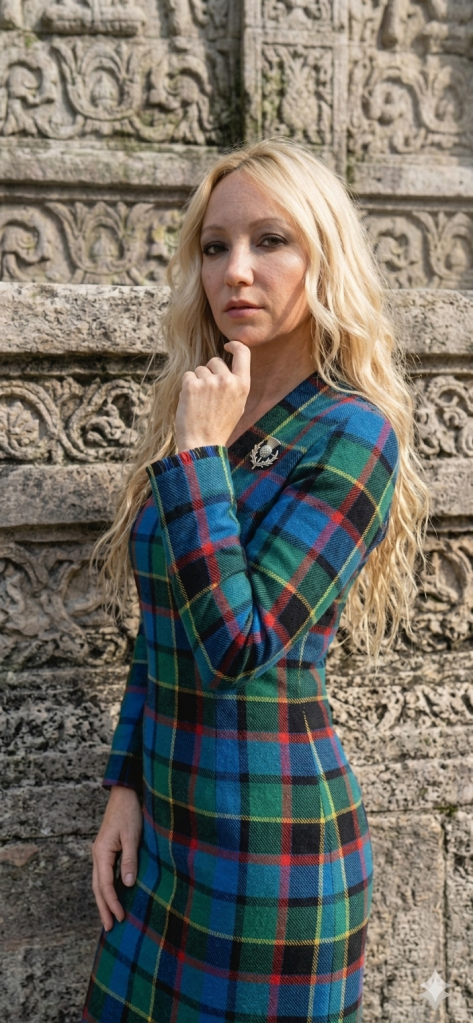
I’ve created an image that highlights the Stinson tartan pattern and the unique Stinson crest you mentioned in your previous request, all within a traditional Scottish setting. This design incorporates a gold-colored crown to symbolize the meaning of the name “Stephen” (crown or wreath), combined with the eagle and key motifs from the historical Stinson arms.
www.x.com/milkywaycupcake/status/2064762313627025739
Origin: The name “Stinson” is a patronymic surname meaning “son of Stein” or “son of Stephen.” It is primarily rooted in Scottish and English history.
The Boar’s Head: Through its connection to the Scottish clan system (specifically as a sept of Clan MacTavish), the boar’s head is a common symbol associated with the broader Stevenson/Stinson lineage.
Historical Context
The Stinson tartan is a relatively modern design, registered in 1985 by Robbie Stinson of Iowa. Because it is a “color reversal” of the Stevenson tartan, its appearance is directly tied to the Stevenson pattern, but with the colors inverted
t.co/Ev2JmMwxBE
fb.watch/HGazQuX1Ij/
www.facebook.com/Billboard/posts/pfbid029fAZ6kcn4ST44htTC3qhsTZkaDHkCFrj5JEC54jd7LDrJkzUuh97CJpwWkKwSUX6l
www.facebook.com/sasha6sin/posts/pfbid02wx6XMLmz2ZPiEZiXZFrwiCib5TpaRexSpvVH4MUadYfB3vNiPxaBpyPAvXd8baUpl
www.facebook.com/permalink.php?story_fbid=pfbid0q7fVEszFUXVW6dhDf2bgUDq4vZNQKCtP2fHqLBvvKByjdgwZpo6NdgYBtiTSYpECl&id=100071548971984
The Scottish Register of Tartans Act 2008 is a piece of legislation passed by the Scottish Parliament to create a centralized, official, and publicly accessible database for tartan designs. It went into effect in 2009.
x.com/milkywaycupcake
Beauty · Love · Life · Superstition · Mystery · Fairytales · Occult · Forbidden Fruit


 Wish Fire Secret Society Page